
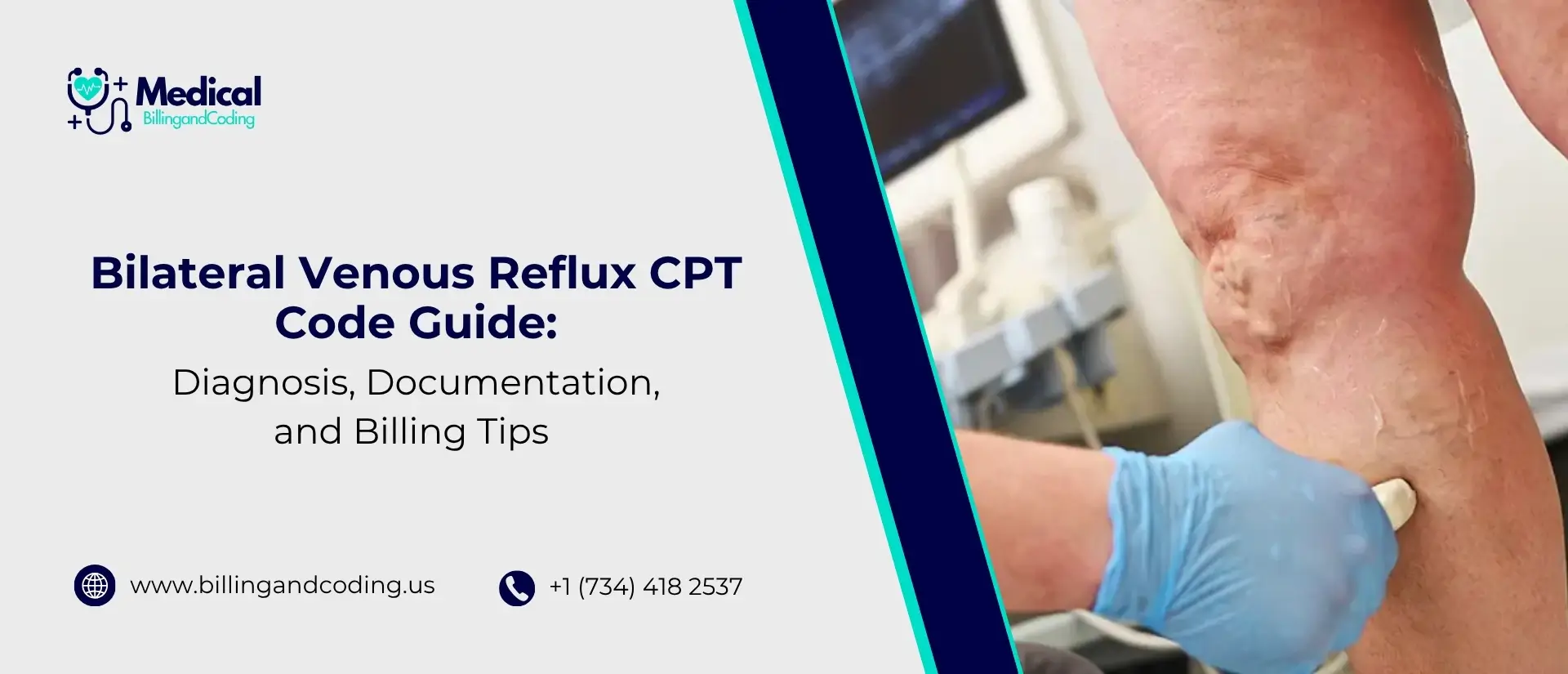
Bilateral venous reflux is a common vascular condition that affects blood flow in both legs, often leading to discomfort and chronic venous insufficiency if left untreated. For healthcare providers, accurate diagnosis and proper billing play a critical role in ensuring both patient care and financial stability. Understanding how CPT coding applies to these procedures is essential for compliance and reimbursement success.
Introduction to Bilateral Venous Reflux
What Is Bilateral Venous Reflux?
Bilateral venous reflux occurs when the valves in the veins of both legs fail to function properly, causing blood to flow backward instead of toward the heart. This leads to pooling of blood, increased venous pressure, and eventual vein damage. It is commonly associated with conditions like varicose veins and chronic venous insufficiency.
Why Accurate Coding Matters in Venous Procedures
Accurate coding ensures that providers receive appropriate reimbursement for the services they perform. Incorrect coding can lead to claim denials, audits, or financial losses for healthcare practices. In venous procedures, where diagnostic imaging is key, precise CPT coding becomes even more critical.
Overview of CPT Coding in Vascular Diagnostics
CPT codes are used to standardize the reporting of medical, surgical, and diagnostic services. In vascular diagnostics, these codes help identify specific procedures such as duplex ultrasounds used to detect venous reflux. Proper use of these codes ensures clear communication between providers and payers.
Understanding Venous Reflux and Its Diagnosis
Venous reflux is a progressive condition that requires early detection and accurate diagnosis to prevent complications. Physicians rely on clinical evaluation and imaging techniques to confirm the presence and severity of reflux. Understanding the diagnostic process is essential for both clinical and billing accuracy.
Causes and Risk Factors of Venous Reflux
Common causes of venous reflux include weakened vein valves, prolonged standing, obesity, and genetic predisposition. Aging and hormonal changes can also contribute to the condition. Identifying these risk factors helps providers determine medical necessity for diagnostic testing.
Common Symptoms and Clinical Presentation
Patients with bilateral venous reflux may experience leg swelling, aching, heaviness, and visible varicose veins. Symptoms often worsen after long periods of standing or sitting. In advanced cases, skin changes and ulcers may develop, indicating severe venous insufficiency.
Diagnostic Methods (Duplex Ultrasound, Doppler Studies)
Duplex ultrasound is the gold standard for diagnosing venous reflux, as it evaluates both blood flow and vein structure. Doppler studies are also used to measure the direction and speed of blood flow. These non-invasive tests are essential for confirming bilateral involvement and guiding treatment decisions.
CPT Codes for Bilateral Venous Reflux
CPT coding for bilateral venous reflux primarily involves diagnostic imaging procedures. Selecting the correct code depends on whether the study is unilateral or bilateral. Understanding these distinctions is key to accurate billing and avoiding claim rejections.
Primary CPT Codes for Venous Duplex Ultrasound
The most commonly used CPT codes for venous reflux studies are 93970 and 93971. These codes represent duplex scans of extremity veins and are widely accepted by insurance providers. Choosing the correct code depends on the extent of the examination performed.
Differences Between Unilateral and Bilateral Coding
Unilateral studies examine one extremity, while bilateral studies assess both legs. CPT code 93970 is typically used for bilateral studies, whereas 93971 is used for unilateral examinations. Proper documentation must clearly indicate whether one or both extremities were evaluated.
When to Use Modifier -50 for Bilateral Procedures
Modifier -50 is used to indicate that a procedure was performed on both sides of the body. However, it is not always required for codes that already define bilateral services. Providers must verify payer-specific guidelines before applying this modifier.
Commonly Used CPT Codes (e.g., 93970, 93971)
CPT code 93970 represents a complete bilateral duplex scan, while 93971 is used for a limited or unilateral study. These codes are essential for reporting venous reflux diagnostics accurately. Misuse or confusion between these codes can lead to billing errors.
Documentation Requirements for Accurate Billing
Proper documentation is the foundation of successful medical billing. Without clear and complete records, even correctly coded claims may be denied. Providers must ensure that all necessary details are included in patient records.
Essential Elements of Medical Documentation
Documentation should include patient history, symptoms, physician findings, and the reason for the test. It must also specify whether the study was unilateral or bilateral. Accurate and detailed records support both clinical decisions and billing claims.
Supporting Medical Necessity
Medical necessity must be clearly demonstrated to justify diagnostic testing. This includes linking symptoms and risk factors to the need for a duplex ultrasound. Insurance providers often review this information before approving reimbursement.
Physician Notes and Diagnostic Reports
Physician notes should clearly describe the procedure performed and the findings. Diagnostic reports must include details of blood flow, valve function, and any abnormalities detected. These records serve as critical evidence during audits or claim reviews.
Billing Guidelines and Best Practices
Following billing guidelines helps ensure timely reimbursement and reduces the risk of claim denials. Providers must stay updated with payer policies and coding changes. Implementing best practices can significantly improve billing efficiency.
Insurance and Medicare Coverage Policies
Coverage for venous reflux studies varies by insurance provider and Medicare guidelines. Some payers require specific documentation or prior authorization. Understanding these policies helps avoid unnecessary delays in payment.
Reimbursement Considerations
Reimbursement rates depend on factors such as location, payer type, and contract agreements. Providers should verify fee schedules and ensure accurate coding to maximize revenue. Incorrect coding can lead to reduced or denied payments.
Avoiding Common Billing Errors
Common errors include incorrect CPT code selection, missing modifiers, and incomplete documentation. These mistakes can result in claim denials or delays. Regular training and audits can help identify and prevent such issues.
Modifiers and Their Role in Venous Reflux Billing
Modifiers provide additional information about a procedure and help clarify how services were performed. They play an important role in ensuring accurate billing and reimbursement. Proper use of modifiers can prevent confusion and claim rejections.
Modifier -50 (Bilateral Procedure)
Modifier -50 indicates that a procedure was performed on both sides of the body. It is used when the CPT code does not already specify bilateral services. Providers should confirm payer requirements before applying this modifier.
Modifier -26 (Professional Component)
Modifier -26 is used to report the professional component of a service, such as the physician’s interpretation of a diagnostic test. This is applicable when the technical component is billed separately. It ensures accurate division of billing responsibilities.
Modifier -TC (Technical Component)
Modifier -TC represents the technical component of a procedure, including equipment and technician services. It is used when billing separately from the professional component. Proper use of this modifier helps avoid duplicate billing.
Common Challenges in Venous Reflux Billing
Billing for venous reflux procedures can be complex due to varying guidelines and documentation requirements. Providers often face challenges that can impact reimbursement. Identifying these issues is the first step toward resolving them.
Denials Due to Incorrect Coding
Incorrect coding is one of the leading causes of claim denials. Using the wrong CPT code or failing to indicate bilateral services can result in rejected claims. Careful review and verification can help prevent these errors.
Lack of Proper Documentation
Incomplete or unclear documentation can lead to claim denials or audits. Providers must ensure that all necessary details are included in patient records. Strong documentation supports both medical necessity and coding accuracy.
Misuse of Modifiers
Improper use of modifiers can confuse payers and lead to claim rejections. For example, using modifier -50 incorrectly may result in overpayment or denial. Understanding when and how to use modifiers is essential for compliance.
Tips to Improve Billing Accuracy and Compliance
Improving billing accuracy requires a combination of training, technology, and regular review processes. Healthcare providers must stay proactive in updating their knowledge and systems. This helps ensure compliance with evolving regulations.
Regular Coding Updates and Training
Coding guidelines change frequently, making ongoing education essential for billing staff. Regular training sessions help keep teams updated on the latest CPT codes and billing practices. This reduces errors and improves efficiency.
Use of Billing Software and Tools
Modern billing software can automate coding processes and reduce manual errors. These tools help streamline workflows and improve accuracy. Investing in reliable software can significantly enhance billing performance.
Internal Audits and Quality Checks
Conducting regular audits helps identify errors and areas for improvement. Quality checks ensure that claims are accurate before submission. This proactive approach reduces denials and enhances overall compliance.
Conclusion
Bilateral venous reflux billing requires a thorough understanding of CPT codes, documentation, and payer guidelines. Accurate coding and proper use of modifiers are essential for successful reimbursement. By following best practices, healthcare providers can minimize errors and improve financial outcomes.
Make An Appintment With Us