
CPT Code 20610 is one of the most commonly used procedure codes in orthopedic and pain management practices. It plays a key role in documenting joint-related treatments and ensuring proper reimbursement. Understanding this code is essential for both providers and medical billers.
What Is CPT Code 20610?
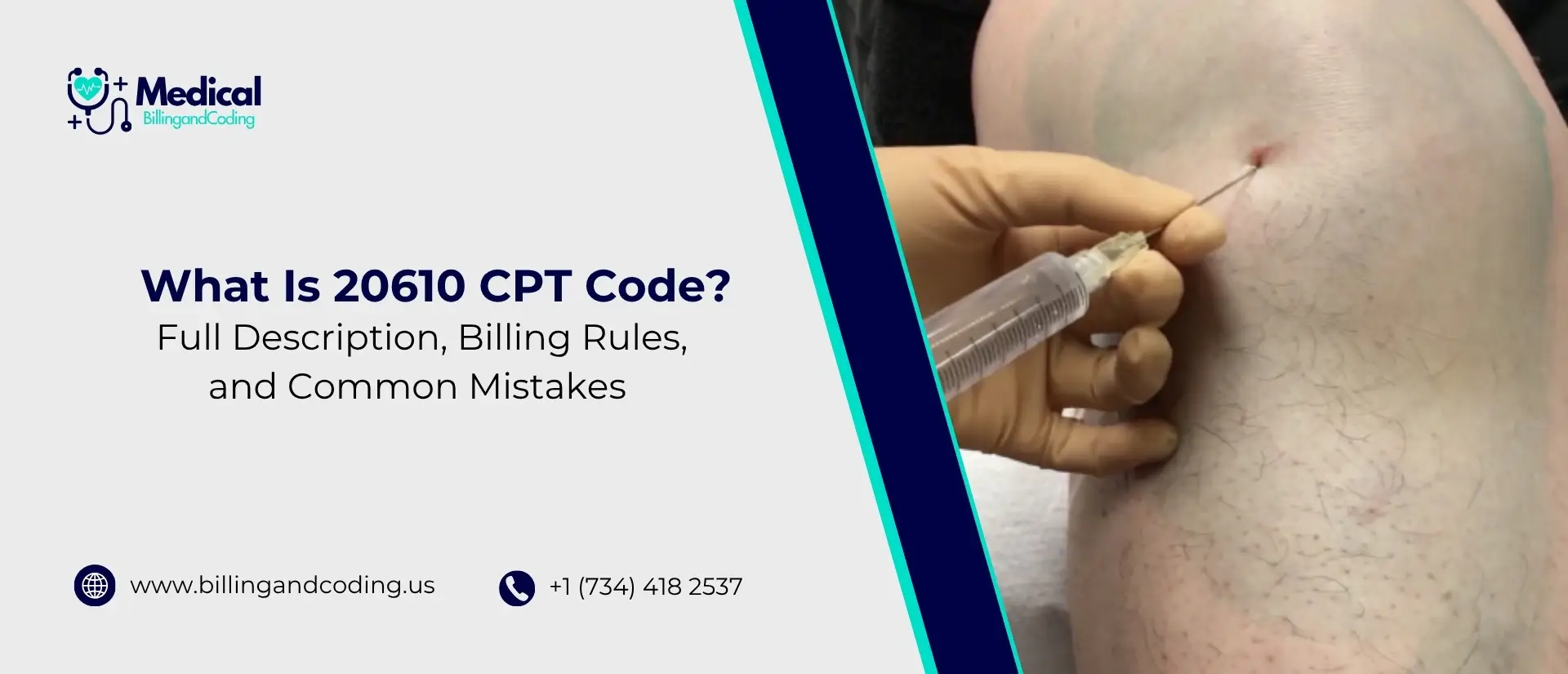
CPT Code 20610 refers to arthrocentesis, aspiration, and/or injection of a major joint or bursa such as the knee or shoulder. It is used when a provider removes fluid or injects medication into a joint for diagnostic or therapeutic purposes. This code does not include imaging guidance unless separately documented.
Why This Code Is Important in Medical Billing
Accurate use of CPT 20610 directly impacts reimbursement and compliance. Errors in coding may result in claim denials or trigger audits. Since joint injections are common, mastering this code helps practices maintain consistent revenue.
Overview of Joint Injection and Aspiration Procedures
Joint injections involve delivering medication like corticosteroids to reduce inflammation and pain. Aspiration involves removing fluid to relieve pressure or test for conditions like infection or gout. These procedures are routine but must be carefully documented.
Full Description of CPT Code 20610
Understanding the full scope of CPT 20610 helps avoid confusion with similar codes. It specifically applies to large joints and includes both aspiration and injection procedures. Providers must ensure that the procedure matches the code definition.
Official Definition and Procedure Details
CPT 20610 is defined as arthrocentesis, aspiration, and/or injection of a major joint or bursa. The procedure may include fluid removal, medication injection, or both. It is typically performed in outpatient or office settings.
Large Joint vs Small Joint – Key Differences
Large joints include the knee, shoulder, and hip, while small joints include fingers and toes. CPT 20610 is only used for large joints, while codes like 20600 or 20605 apply to smaller joints. Choosing the wrong category leads to billing errors.
Common Conditions Treated with 20610
This procedure is often used for arthritis, bursitis, joint swelling, and inflammatory conditions.It reduces pain and enhances mobility. It may also be used to diagnose joint infections or injuries.
When to Use CPT Code 20610
Using CPT 20610 correctly depends on clinical need and proper documentation. Providers must ensure that the procedure meets medical necessity criteria. It should only be used for eligible joints and conditions.
Eligible Joints (Knee, Shoulder, Hip, etc.)
CPT 20610 is used for procedures involving major joints such as the knee, shoulder, and hip. These joints are large and commonly treated for pain or inflammation. Using this code for smaller joints is incorrect.
Clinical Indications for Use
Common indications include joint pain, swelling, stiffness, and suspected infection. Providers may also use it for therapeutic injections in chronic conditions. Medical necessity must always be documented.
Documentation Requirements
Documentation should include the joint treated, procedure performed, and reason for treatment. It must clearly show whether aspiration, injection, or both were done. Detailed notes support claim approval.
CPT Code 20610 vs Other Related Codes
There are several similar CPT codes, and confusion is common. Understanding the differences helps ensure accurate billing. Each code has specific criteria that must be followed.
Difference Between 20610 and 20611
CPT 20611 includes ultrasound guidance, while 20610 does not. If imaging is used, it must be documented to justify using 20611. Choosing the correct code ensures proper reimbursement.
Difference Between 20610 and 20605
CPT 20605 is used for intermediate joints like the elbow or ankle. CPT 20610 is strictly for major joints. Using the wrong code can lead to denials.
Choosing the Correct Code for Accurate Billing
Always verify the joint size and whether imaging guidance was used. Match the procedure details with the correct CPT code. This reduces errors and improves claim success rates.
Billing Guidelines for CPT Code 20610
Billing CPT 20610 requires following payer-specific rules and general coding guidelines. Proper billing ensures timely reimbursement and avoids compliance issues. Understanding these guidelines is essential.
Insurance Coverage and Reimbursement
Most insurance providers, including Medicare, cover CPT 20610 when medically necessary. Reimbursement rates vary by payer and location. Providers should verify coverage before performing the procedure.
Frequency Limitations and Medical Necessity
Many payers limit how often joint injections can be performed. Repeated procedures must be justified with clear medical necessity. Overuse without documentation may trigger audits.
Place of Service Considerations
CPT 20610 is commonly billed in office or outpatient settings. The place of service affects reimbursement rates. Accurate POS coding is important for correct payment.
Modifiers Used with CPT Code 20610
Modifiers provide additional information about the procedure. They help clarify special circumstances and ensure accurate billing. Incorrect use of modifiers can lead to denials.
Common Modifiers (Modifier 25, 59, LT/RT)
Modifier 25 is used when a separate E/M service is performed on the same day. Modifier 59 is used to show that a procedure was separate and distinct from other services performed on the same day. LT and RT specify left or right joint.
When and How to Apply Modifiers
Modifiers should only be used when documentation supports them. They must clearly reflect the services provided. Incorrect application can result in claim rejection.
Avoiding Modifier Misuse
Avoid using modifiers unnecessarily or incorrectly. Always follow payer guidelines. Regular audits can help identify misuse.
Documentation Requirements for 20610
Proper documentation is critical for billing CPT 20610. It supports medical necessity and ensures compliance. Incomplete records can lead to claim denials.
Required Clinical Notes and Reports
Notes should include patient history, diagnosis, and procedure details. The joint treated and method used must be clearly documented. Include any complications or outcomes.
Supporting Medical Necessity
Documentation must justify why the procedure was needed. Include symptoms, diagnosis, and prior treatments. This helps validate the claim.
Importance of Accurate Coding Documentation
Accurate documentation ensures correct coding and reimbursement. It also protects against audits. Consistency in records is key.
Common Mistakes in Billing CPT Code 20610
Billing errors can lead to denied claims and revenue loss. Understanding common mistakes helps avoid them. Regular training can reduce these issues.
Incorrect Use of Modifiers
Using modifiers without proper documentation is a frequent mistake. It can lead to claim rejection. Always ensure modifiers are justified.
Billing Without Proper Documentation
Incomplete or missing documentation is a major cause of denials. Every procedure must be clearly recorded. Documentation should match the code billed.
Confusing with Ultrasound-Guided Procedures
Using 20610 instead of 20611 when imaging is used is a common error. Always verify whether ultrasound guidance was used. Proper coding ensures correct payment.
Duplicate or Unbundled Billing Errors
Billing the same procedure multiple times or unbundling services incorrectly can trigger audits. Follow coding guidelines carefully. Avoid unnecessary duplication.
Best Practices for Accurate Billing
Implementing best practices improves billing accuracy and reduces denials. It also enhances compliance and efficiency. Consistent processes are essential.
Tips to Avoid Claim Denials
Verify patient eligibility and insurance coverage before procedures. Ensure documentation is complete and accurate. Double-check codes before submission.
Ensuring Compliance with Payers
Stay updated with payer guidelines and coding changes. Follow Medicare and insurance policies closely. Compliance reduces audit risks.
Staff Training and Coding Audits
Regular training keeps staff updated on coding rules. Internal audits help identify errors early. Continuous improvement leads to better outcomes.
Conclusion
CPT Code 20610 is a vital code in medical billing for joint procedures. Accurate use ensures proper reimbursement and compliance. Understanding its guidelines helps avoid common errors.
Make An Appintment With Us