
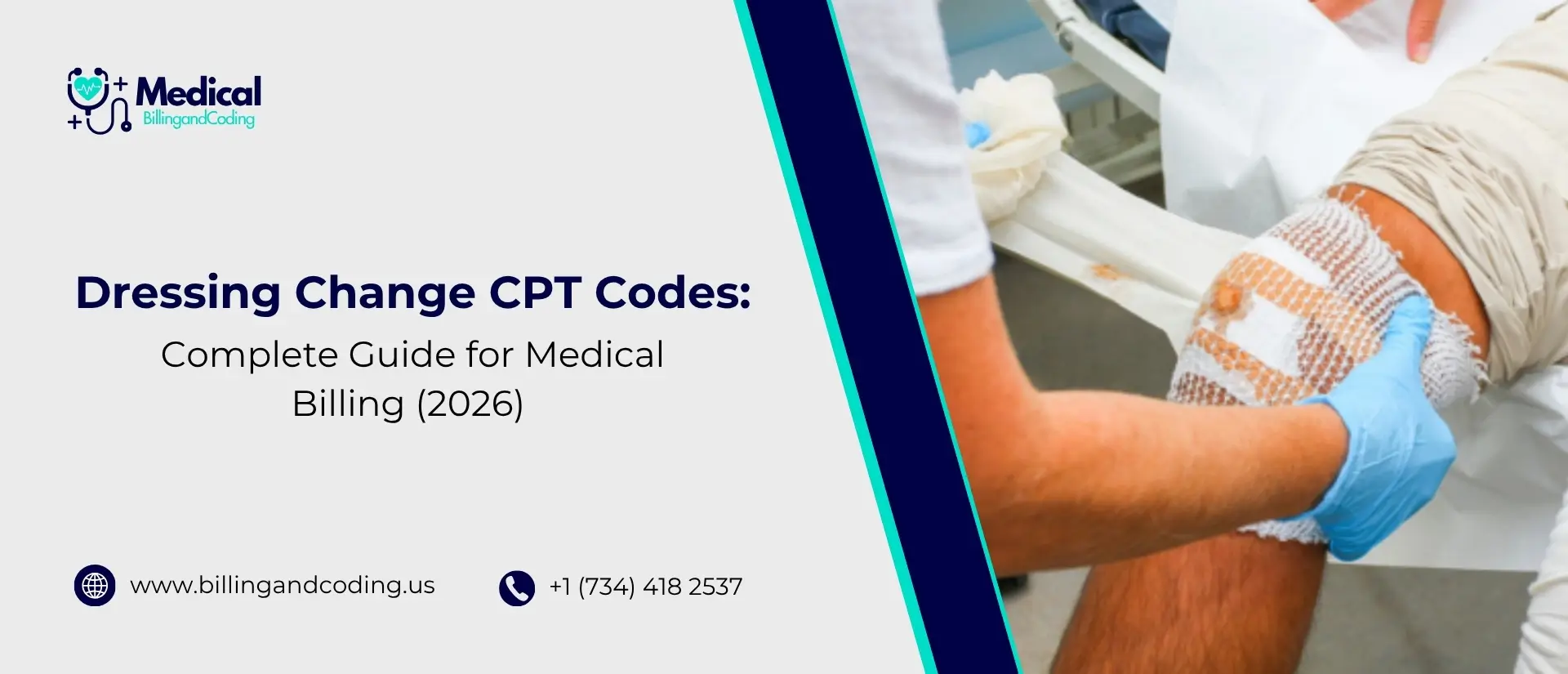
Medical billing is one of those fields where a single wrong code can trigsger a claim denial, an audit or even a compliance investigation. When it comes to wound care, dressing change CPT codes sit at the center of accurate reimbursement. Whether you are a seasoned medical biller, a clinic administrator or a nurse practitioner trying to understand the billing side of patient care, this guide breaks everything down in plain language.
What Is a Dressing Change CPT Code?
Definition and Purpose in Medical Billing
A CPT code short for Current Procedural Terminology is a standardized numeric code that describes a medical service or procedure. The American Medical Association maintains and updates these codes every year. When a provider performs a dressing change on a patient’s wound, that service needs to be reported to the insurance company using a specific CPT code so the provider can receive payment.
Dressing change CPT codes capture the clinical work involved in cleaning a wound, removing old dressings, assessing the wound’s condition and applying fresh dressing materials. Without the correct code, the entire claim can fall apart before it even reaches a human reviewer.
Why Accurate CPT Coding Matters for Wound Care
Wound care is among the most commonly miscoded service categories in outpatient and home health settings. The consequences of inaccurate coding stretch far beyond a denied claim. Upcoding billing for a more complex service than what was actually performed can result in fraud investigations. Downcoding billing for less than what was done means the practice loses revenue it rightfully earned.
Accurate coding also protects patients. When codes do not match clinical documentation, insurance companies may question medical necessity and deny coverage. That burden often falls on the patient in the form of unexpected bills. Getting the code right the first time keeps the entire system moving smoothly.
Complete List of Dressing Change CPT Codes (2026)
Simple Wound Dressing Change CPT Codes
Simple dressing changes involve straightforward wounds that are healing without significant complication. These are typically superficial wounds with minimal exudate and no signs of infection or necrosis.
CPT 97597 covers debridement of open wounds with removal of devitalized tissue for wounds up to 20 square centimeters. While this code leans toward debridement it is frequently paired with simple dressing application in wound care visits.
CPT 16020 is used for dressings and debridement of partial-thickness burns. It applies when the wound is small and the procedure is not particularly involved.
For truly basic dressing changes without debridement providers often use evaluation and management codes combined with supply codes because there is no standalone CPT code for a simple dressing change alone. This is an important nuance that trips up many new billers.
Complex Wound Dressing Change CPT Codes
Complex dressing changes involve wounds that require more clinical judgment and hands-on work. These might include deep wounds with tunneling, wounds with heavy exudate or infected surgical sites.
CPT 97598 covers debridement of each additional 20 square centimeters beyond the first area coded under 97597. So for larger wounds this add-on code gets stacked on top of the primary code.
CPT 16025 covers dressings and debridement for medium-sized burns or wounds and requires more physician involvement than 16020.
CPT Codes for Surgical Wound Dressing Changes
Post-surgical wound care has its own coding landscape. After a surgical procedure the global period matters enormously. During the global period — which can be 10 or 90 days depending on the surgery — routine dressing changes are typically bundled into the surgical fee and cannot be billed separately.
Once the global period ends or if the dressing change goes beyond routine care CPT 97602 applies. This code covers non-selective debridement without anesthesia including wet-to-dry dressings and similar techniques used on surgical wounds that are not healing as expected.
CPT Codes for Chronic Wound Dressing Changes
Chronic wounds such as diabetic foot ulcers venous leg ulcers and pressure injuries require ongoing wound management. These patients often receive dressing changes multiple times per week for months at a time.
CPT 97610 covers low-frequency non-contact ultrasound therapy sometimes used in chronic wound management. CPT 11042 through 11047 cover debridement of subcutaneous tissue muscle and bone for deeper chronic wounds. The specific code depends on wound depth and surface area.
For chronic wound management in a structured program providers may also bill CPT 97016 for vasopneumatic devices or other adjunctive therapy codes depending on what the visit actually involves.
How to Choose the Right Dressing Change CPT Code
Key Factors That Determine the Correct Code
Choosing the right code is not guesswork. It is a clinical and administrative process grounded in documentation. The key factors include wound type (acute versus chronic) wound depth wound size in square centimeters presence of infection or necrosis the level of provider skill required and whether debridement was performed during the visit.
Each of these factors points toward a different part of the CPT code set. Skipping any one of them during the documentation process creates a gap that can lead to the wrong code being selected.
Simple vs. Complex Dressing Change: What’s the Difference?
The line between simple and complex is not always obvious on the clinical floor but in billing terms it comes down to time complexity and resources. A simple dressing change might take five minutes involve a clean shallow wound and require only basic gauze and tape. A complex dressing change might involve packing a deep tunneling wound irrigating it assessing for signs of osteomyelitis and applying a specialty foam dressing with antimicrobial properties.
The complexity of the clinical picture drives the code. If the documentation does not reflect that complexity the biller cannot justify using a higher-level code even if the provider did the work.
Role of Wound Size and Depth in Code Selection
Many wound care CPT codes are specifically tied to wound dimensions. CPT 97597 for example applies to wounds up to 20 square centimeters. Wounds larger than that require the add-on code 97598 for each additional 20 square centimeters. This means the provider must measure the wound and record those measurements clearly in the clinical note. Without a documented measurement the coder has no basis for selecting the correct code and the claim is vulnerable.
Depth matters too. A wound that extends to subcutaneous tissue codes differently than one that reaches muscle or bone. The 11042-11047 series specifically distinguishes between these layers.
Documentation Requirements for Dressing Change Billing
What Must Be Documented for a Dressing Change Claim
Strong documentation is the backbone of a defensible claim. For dressing change services the clinical note should include wound location wound dimensions (length width and depth) wound bed description (granulating sloughing necrotic) periwound skin condition presence of exudate and its character odor if present and the type of dressing applied.
The provider should also note the clinical decision-making involved particularly if the wound required debridement or if the treatment plan was modified based on wound assessment findings.
Common Documentation Mistakes to Avoid
One of the most common mistakes is templated or cloned notes. When every wound care note looks identical reviewers become suspicious and rightly so. Wounds change over time and documentation should reflect that progression.
Another frequent error is failing to document wound measurements. As mentioned above many CPT codes are size-dependent. A note that says “wound assessed and dressed” without any measurements is essentially unbillable for anything beyond the most basic level of service.
Providers also sometimes forget to document the time spent on the service which becomes important when time-based coding is used or when supporting an evaluation and management level of service.
How to Support Medical Necessity in Your Notes
Insurance payers want to see that the service was medically necessary. For wound care this means documenting why the patient needed the dressing change at that frequency why a particular type of dressing was chosen and what the treatment goal is. A diabetic patient with a foot ulcer who has poor circulation and is not healing as expected presents a clear medical necessity story. That story needs to be told in the clinical note not assumed.
Dressing Change CPT Codes by Setting
CPT Codes for Dressing Changes in the Office
In the office setting wound care is typically billed under a combination of an E/M code for the visit and a procedure code for the wound care itself. If the dressing change is the sole reason for the visit and no significant evaluation occurs it may be billed as a procedure-only visit. If a meaningful evaluation also takes place Modifier 25 may be needed to justify billing both the E/M and the procedure on the same day.
Dressing Changes in Hospitals and Outpatient Facilities
In hospital outpatient departments CPT codes are mapped to Ambulatory Payment Classifications (APCs) under Medicare. The reimbursement structure differs from the physician fee schedule. Facility coders must be aware that some codes that are separately billable in an office setting may be bundled into a facility APC payment.
Inpatient hospital dressing changes are typically part of the overall inpatient stay and are not billed separately under CPT. Instead the diagnosis-related group (DRG) payment covers the service.
Home Health Dressing Change Billing Codes
Home health agencies operate under an entirely different payment model called the Patient-Driven Groupings Model (PDGM). Dressing changes performed by home health nurses are not individually billed using CPT codes in the traditional sense. Instead they are captured as part of the overall home health episode payment. However CPT codes may still be relevant for physician oversight visits or for wound care specialist services provided in the home setting outside of a home health agency arrangement.
Common Billing Errors and How to Avoid Them
Upcoding and Downcoding Risks in Wound Care
Both ends of the coding spectrum carry risk. Upcoding attracts attention from payers and government auditors. The Office of Inspector General (OIG) regularly includes wound care in its workplan as an area of focus. Downcoding on the other hand quietly drains practice revenue and can signal to auditors that a practice lacks billing sophistication or worse is hiding something by underreporting.
Unbundling Issues with Dressing Change Codes
Unbundling means billing separately for services that should be reported together under a single comprehensive code. In wound care this can happen when a provider bills for both debridement and dressing application as separate line items when one code is meant to cover both. National Correct Coding Initiative (NCCI) edits exist specifically to catch and reject these combinations.
How to Handle Claim Denials for Dressing Changes
When a dressing change claim is denied the first step is to read the denial reason carefully. Common denial reasons include lack of medical necessity missing documentation global period conflicts and coding errors. Most denials can be appealed with supporting documentation. A well-written appeal letter that includes the clinical notes the relevant CPT code guidelines and a clear explanation of medical necessity has a strong chance of overturning the denial.
Dressing Change CPT Codes and Medicare/Medicaid Guidelines
Medicare Coverage Rules for Wound Dressing Changes
Medicare covers wound care services including dressing changes when they are medically necessary and properly documented. The Medicare Claims Processing Manual and Local Coverage Determinations (LCDs) issued by Medicare Administrative Contractors (MACs) provide specific coverage criteria. Providers should always check the applicable LCD for their region before billing wound care services to Medicare patients.
Medicaid Billing Variations by State
Medicaid is a state-federal partnership and billing rules vary significantly from state to state. Some states cover a wide range of wound care services while others have strict limitations on frequency and provider type. Billers working with Medicaid patients should consult their state’s Medicaid provider manual for wound care specific guidance.
Prior Authorization Requirements
Many commercial insurers require prior authorization for ongoing wound care especially for advanced wound care products and services. Failing to obtain prior authorization before providing the service is one of the leading causes of claim denials in wound care billing. Building a prior authorization workflow into the practice’s scheduling and clinical process prevents this problem before it starts.
Modifier Use with Dressing Change CPT Codes
When to Use Modifier 25 with Dressing Changes
Modifier 25 signals to the payer that a significant separately identifiable evaluation and management service was performed on the same day as a procedure. In wound care this comes up when a provider both evaluates the patient’s overall condition and performs a dressing change during the same visit. The E/M service must be truly separate from the procedure and must be documented as such.
Modifier 59 and Unbundling Prevention
Modifier 59 indicates that a procedure or service is distinct from another service performed on the same day. It is used to override NCCI bundling edits when two procedures are genuinely separate and distinct. However it should never be used routinely or defensively. It requires clinical justification and documentation to support its use.
Other Common Modifiers in Wound Care Billing
Modifier 76 is used when the same procedure is repeated by the same provider on the same day. Modifier 77 applies when a different provider repeats the procedure. In wound care settings where patients may receive dressing changes more than once daily these modifiers become relevant and must be used accurately.
Conclusion Mastering Dressing Change CPT Coding in 2026
Dressing change billing sits at the intersection of clinical care and administrative precision. The right code depends on the right documentation. Wound size depth type and the clinical complexity of the visit all feed into code selection. Modifiers add another layer that when used correctly protects the claim and when misused creates compliance exposure. Providers who invest time in understanding the coding rules and billers who stay close to the clinical reality of wound care will consistently produce cleaner claims fewer denials and stronger revenue performance.
Make An Appintment With Us