
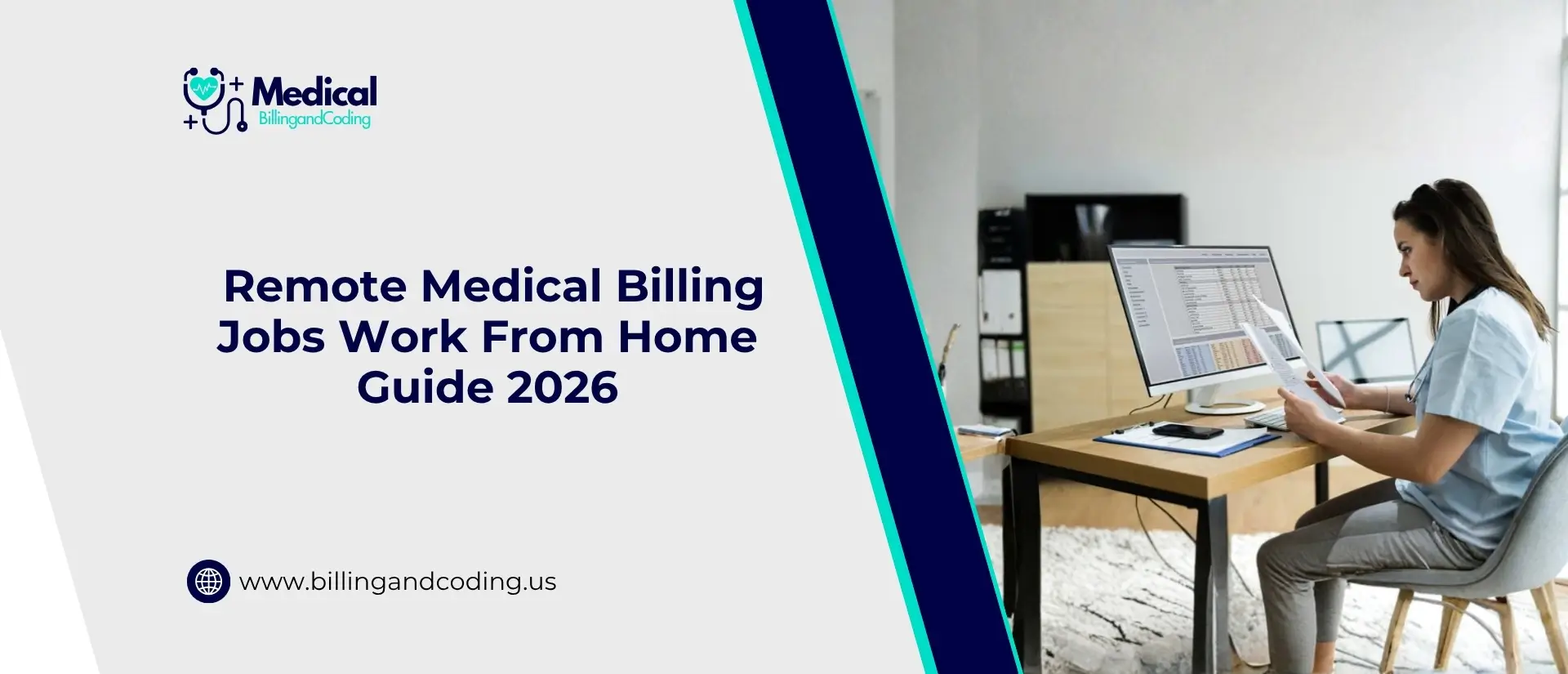
Something quiet has been happening in healthcare over the past several years. The work that once lived inside hospital billing departments and insurance offices has been steadily migrating into spare bedrooms and home offices across the country. Remote medical billing is no longer an experiment. It is a fully established career path that thousands of professionals are building their livelihoods around.
If you have ever considered this field but were not sure where to start or what it actually looks like day to day then this guide is for you. Not the glossy version. The real one.
Growth of Remote Healthcare Jobs
Healthcare was one of the last industries anyone expected to go remote. The assumption was always that care delivery required physical presence. That assumption was partly right. But billing? Coding? Claims management? None of that requires you to be in the same building as the patient or the provider.
Digital health records changed everything. Once clinical documentation moved into cloud-based platforms and billing software became accessible from anywhere with a secure internet connection the geographic requirement dissolved. What took years to build in other industries happened faster in healthcare than most people anticipated.
Why Medical Billing Is Perfect for Remote Work
Think about what medical billing actually involves. You are reviewing records. You are assigning codes. You are submitting claims to insurance companies and tracking what comes back. Every single one of those tasks lives inside software. There is no equipment to operate. No patient to examine. No procedure to assist with.
That digital-first nature makes medical billing unusually well suited to remote work. The job does not change when you move it out of an office. The responsibilities stay identical. Only the commute disappears.
What This Guide Covers
This guide walks through everything a person needs to understand about remote medical billing careers. Skills. Certifications. Where to find jobs. What salaries actually look like. What challenges nobody warns you about upfront. Whether you are completely new to this field or already working in billing and wondering whether remote work is realistic for you this covers both situations honestly.
What Are Remote Medical Billing Jobs
Role of a Remote Medical Billing Specialist
A remote medical billing specialist sits at the intersection of clinical care and financial operations. They translate what happened during a patient visit into the standardized language that insurance companies use to process payments. That translation has to be accurate because inaccurate coding means delayed payment or no payment at all.
Beyond the coding itself specialists follow up on unpaid claims. They communicate with insurance companies when claims are rejected or require additional information. They work with providers when documentation needs clarification. The job is less about sitting quietly and entering numbers and more about actively managing the financial pipeline of a healthcare organization.
Daily Tasks and Responsibilities
A typical day involves pulling patient records from an electronic health system and reviewing them against the services documented. From there codes get assigned using ICD-10 for diagnoses and CPT or HCPCS codes for procedures. Claims get built and submitted through a clearinghouse or directly to payers.
Then the follow-up work begins. Which claims came back denied? Which are sitting unpaid past the expected processing window? Which need an appeal? Answering those questions and taking action on them is where a lot of the actual work lives. It is less routine than it sounds from the outside.
How Remote Billing Differs from Office Jobs
The honest answer is that the work itself does not differ much. The difference is almost entirely environmental. Remote billers use the same software. They follow the same payer guidelines. They meet the same deadlines.
What changes is accountability structure. In an office someone notices if you are struggling. In a remote setting you have to notice for yourself and ask for help. That shift is small for some people and significant for others. Knowing which type you are before you take a remote billing role matters.
Skills Required for Remote Medical Billing Jobs
Medical Coding Knowledge
ICD-10 codes describe diagnoses. CPT codes describe what the provider did during the visit. HCPCS codes cover supplies and services that CPT does not capture. Together these three systems form the language that medical billing runs on.
You do not need to have every code memorized. The volumes are too large for that. What you do need is a solid understanding of how the systems are structured and enough familiarity with the specialties you are billing for to know where to look and what to look for.
Attention to Detail and Accuracy
Billing errors are expensive. A wrong digit in a code. A missing modifier. A date of service entered incorrectly. Any of these can result in a rejected claim that then has to be reworked from scratch. Multiply that across hundreds of claims a week and the cost of carelessness becomes obvious fast.
The professionals who succeed long-term in this field are not necessarily the fastest. They are the ones who have built habits that catch mistakes before claims go out the door.
Communication and Software Skills
Remote billing requires you to communicate in writing more than in person. Emails to providers requesting documentation clarification. Written appeals to insurance companies. Messages to patients about balances owed. The quality of those communications affects outcomes in ways that are easy to underestimate.
On the software side fluency in at least one major billing platform is essential. Practice Fusion. Kareo. AdvancedMD. Athenahealth. The specific platform varies by employer but the underlying logic of billing software is consistent enough that experience with one transfers to others reasonably quickly.
Qualifications and Certifications Needed
Required Education Background
A high school diploma is the technical floor for most entry-level billing positions. That said a background in healthcare administration or a related field puts candidates in a stronger position when competing for the same roles.
What education signals to employers is less about the specific degree and more about whether you have been exposed to healthcare systems in a structured way. Medical terminology. Basic anatomy. Insurance fundamentals. Any formal education that covered those topics is an asset.
Important Certifications
The Certified Professional Coder credential from the AAPC is one of the most widely recognized in this field. The Certified Billing and Coding Specialist from the NHA is another strong option. Both require passing an exam and both signal to employers that you understand the technical side of billing beyond the basics.
Certification is not universally required. Some employers hire based on experience alone. But in a competitive job market a certification is often the difference between two otherwise similar candidates. The time invested in earning one pays back quickly in hiring opportunities and starting salary.
Experience Level for Beginners vs Experts
Beginners typically start with entry-level roles that involve more straightforward billing tasks under closer oversight. Charge entry. Payment posting. Basic claim follow-up. These roles exist specifically to build the hands-on experience that moves someone into more complex work over time.
Experienced billers with specialty knowledge in areas like oncology or cardiology or mental health can target roles that pay significantly more. Specialty billing is harder and rarer which makes skilled specialists genuinely valuable in the job market.
How to Find Remote Medical Billing Jobs
Job Boards and Freelance Platforms
Indeed and LinkedIn are the obvious starting points. Both have robust filters for remote healthcare roles. Glassdoor adds the benefit of salary data and company reviews that help you evaluate whether a particular employer is worth pursuing.
Beyond the major boards healthcare-specific job sites like Health eCareers and Mdical Billing and Coding Online list opportunities that do not always appear in general searches. Spending time on multiple platforms rather than just one broadens the field considerably.
Healthcare Companies Hiring Remote Billers
Large health systems often post remote billing roles directly on their own career pages. Outsourced medical billing companies are another strong avenue because their entire business model depends on having skilled remote billers available. These companies often offer more structured onboarding and training than smaller practices.
Physician groups in specialties with complex billing needs frequently hire remote specialists as well. Targeting companies in specialties you already have experience with sharpens your application immediately.
Networking and Referrals
The AAPC has local chapters and an active online community. LinkedIn groups focused on medical billing surface job postings and industry conversations that you would not find through a standard job search. Informational conversations with people already working remotely in this field are genuinely useful. Most people are willing to share what they know about getting hired.
Referrals remain one of the most reliable hiring pathways in any industry. Building relationships before you need them produces better results than reaching out when you are actively desperate for a job.
Salary Expectations for Remote Medical Billing Jobs
Entry-Level Salary Range
Entry-level remote billing roles in the United States typically start somewhere between $30,000 and $38,000 annually. The range is wide because it depends heavily on the employer type and the specific responsibilities involved. Some entry positions that include coding carry higher starting salaries than pure billing roles.
Mid-Level and Experienced Salary Growth
Professionals with three to five years of experience and strong specialty knowledge commonly earn between $45,000 and $60,000. Senior billers at large health systems or specialized billing companies can exceed that range. Billing managers who oversee remote teams earn more still.
Factors That Affect Salary
Specialization is the single biggest salary lever available to billing professionals. Billing for a general family practice and billing for a radiation oncology center require completely different levels of expertise. The complexity of the latter commands significantly higher compensation.
Certifications matter. Consistent performance metrics matter. The size and type of the organization matter. Location still has some influence on salary even in remote roles because many employers anchor compensation to regional cost-of-living benchmarks.
Benefits of Remote Medical Billing Jobs
Work From Home Flexibility
The flexibility is real and it is one of the main reasons people pursue this career path. The ability to structure your day around your most productive hours rather than a fixed office schedule changes how work feels at a fundamental level. That is not a minor benefit. For many people it is the entire reason they are in this field.
Better Work-Life Balance
The commute time that disappears when you work remotely does not just save money on gas. It gives back an hour or two of daily life that most office workers never fully account for until it is gone. What people do with that time varies enormously but the general effect on quality of life tends to be positive.
Cost and Time Savings
Lunch out every day. Work clothes that need dry cleaning. Gas or transit costs. Parking. These expenses accumulate in ways that are easy to overlook until you stop paying them. Remote workers often find that the effective financial benefit of working from home is larger than they expected once those costs are removed from the equation.
Challenges of Remote Medical Billing Work
Maintaining Accuracy at Home
The home environment introduces distractions that a professional office setting does not. Children. Deliveries. Household noise. For a job where accuracy directly determines whether claims get paid the ability to maintain concentration is not optional.
Experienced remote billers develop routines and physical setups that minimize interruption. A dedicated workspace. Defined working hours communicated clearly to people in the household. Habits around checking work before submission. These are not complicated solutions but they require deliberate effort to establish.
Meeting Deadlines Remotely
Claims have filing deadlines. Miss them and the revenue is often gone permanently because payers will not process late submissions. In a remote environment nobody is watching the clock for you. The responsibility for tracking deadlines and managing your workload sits entirely with you.
Managing Distractions and Isolation
The isolation is real for some people and barely noticeable for others. If you are someone who draws energy from office relationships and casual professional interaction then remote work can feel genuinely lonely over time. Being honest with yourself about this before committing to a fully remote role is worth doing.
Tips to Succeed in Remote Medical Billing Jobs
Building Strong Technical Skills
The billing software landscape changes. New platforms emerge. Existing platforms release major updates. Staying technically current means committing to learning as an ongoing practice rather than something that stops once you have mastered your current tools.
Staying Updated with Healthcare Regulations
CPT codes update annually. ICD-10 updates annually. Payer policies change throughout the year without warning. A billing professional who is not actively monitoring these changes will start making errors without realizing why.
The AAPC and AHIMA both publish regular updates. Employer-provided training helps. But ultimately the responsibility for staying current belongs to the individual biller.
Time Management Strategies
The most effective remote billers tend to work in structured blocks rather than reacting to tasks as they appear. Setting specific time for claim submission. Specific time for denial follow-up. Specific time for reporting and communication. Structure that you create for yourself is less rigid than external supervision but it serves the same function.
Final Thoughts
The economics of healthcare are pushing organizations toward efficiency. Remote billing delivers that efficiency without sacrificing quality when done well. The trend toward outsourcing billing to specialized companies and remote teams is not reversing. It is accelerating. That creates sustained demand for skilled remote billing professionals that shows no real signs of peaking.
Make An Appintment With Us