
Medical billing professionals working in cardiology practices face one of the most nuanced coding landscapes in all of healthcare. Stress test CPT codes sit at the intersection of clinical complexity and administrative precision a single wrong code can trigger a claim denial, a compliance audit, or worse, a recoupment demand from Medicare. This guide breaks down every major stress test CPT code, explains the rules governing their use and gives you the tools To bill accurately defend your claims during audits and maximize legitimate reimbursement.
What Is a Stress Test in Medical Billing?
A stress test, in the clinical sense, is a diagnostic procedure used to evaluate how the cardiovascular system responds to physical or pharmacological exertion. Physicians order stress tests to detect coronary artery disease, assess exercise tolerance, evaluate known arrhythmias, and stratify cardiac risk before surgical procedures.
In the context of medical billing, a stress test is a bundled or component-based service reported through the Current Procedural Terminology system maintained by the American Medical Association. The CPT codes associated with stress testing capture not just the test itself but the distinct professional activities surrounding it supervision, recording, and interpretation. Each of these activities may be billed separately or together depending on who performs them and where the service takes place.
Understanding this distinction is foundational. Payers do not simply reimburse for a stress test as a single event. They reimburse for documented, medically necessary components performed by qualified professionals in appropriate settings. When the documentation aligns with the code, reimbursement follows. When it does not, denials follow.
Types of Stress Tests and Their CPT Codes
The umbrella term “stress test” covers a family of procedures that differ significantly in methodology, equipment, imaging modality and clinical purpose. Each category carries its own set of CPT codes.
Exercise Stress Test CPT Codes
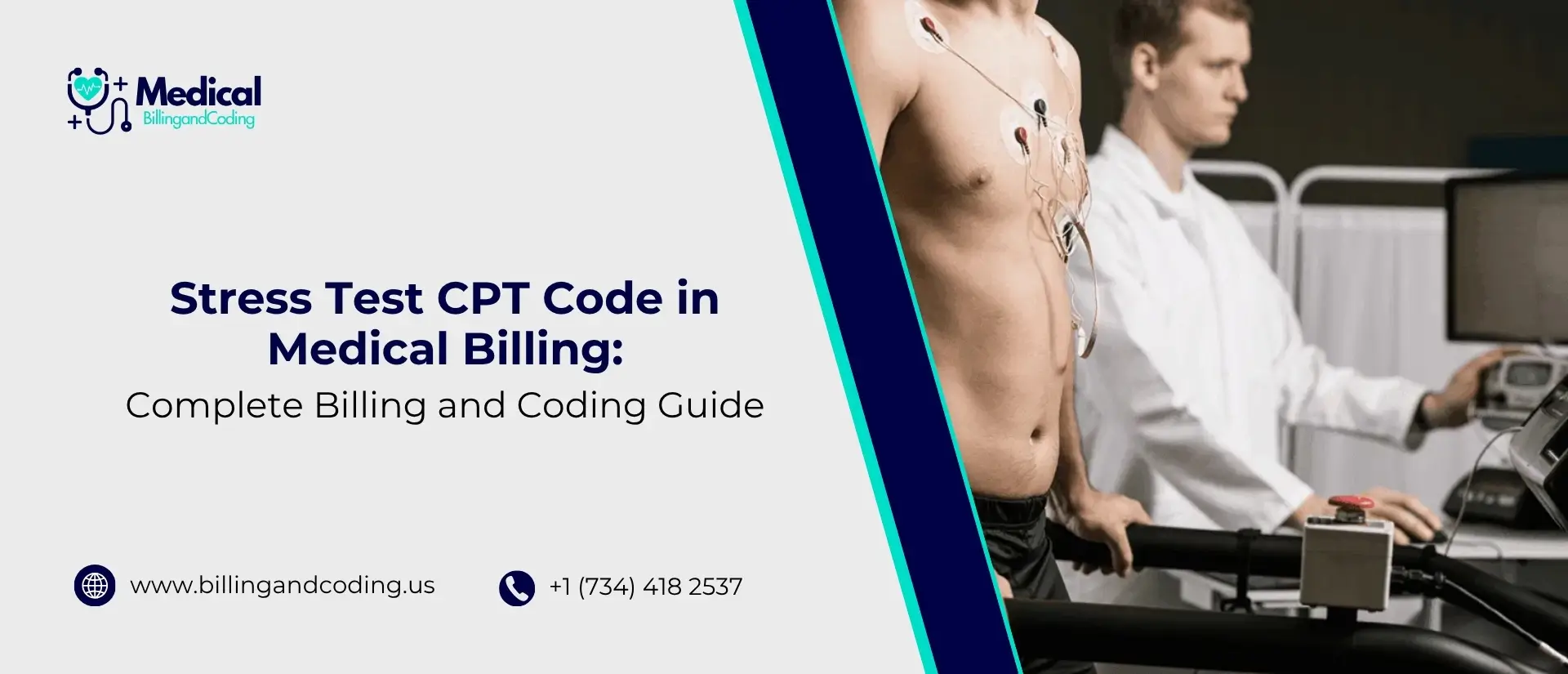
The exercise stress test also called an exercise tolerance test or graded exercise test measures the heart’s electrical activity during physical exertion, typically on a treadmill or stationary bicycle. The standard codes in this family are 93015 through 93018, which represent the global service and its three components: supervision, tracing and recording, and interpretation.
These codes apply when the sole purpose of the test is electrocardiographic monitoring. No imaging is involved. The test captures rhythm disturbances, ST-segment changes and hemodynamic responses to increasing workloads across standardized protocols such as the Bruce or modified Bruce protocol.
Nuclear Stress Test CPT Codes
Nuclear stress testing adds myocardial perfusion imaging to the physiological stress component. Radioactive tracers most commonly technetium-99m or thallium-201 are injected at peak stress and at rest. The resulting images reveal areas of reduced blood flow or infarct territory that standard electrocardiographic monitoring would miss entirely.
CPT codes for nuclear stress testing fall under the 78451 to 78454 range for myocardial perfusion imaging, depending on whether SPECT imaging is used and whether both stress and rest phases are included. These codes are reported alongside the appropriate stress component codes when a physician separately supervises the physiological portion of the test.
Stress Echocardiography CPT Codes
Stress echocardiography captures ultrasound images of the heart at rest and at peak stress to identify wall motion abnormalities that indicate ischemia or cardiomyopathy. This modality offers structural assessment beyond what nuclear imaging provides, including evaluation of valvular function under stress conditions.
CPT codes 93350 and 93351 govern stress echocardiography. Code 93350 represents the echocardiographic portion performed at rest and during cardiovascular stress testing. Code 93351 includes the same echocardiographic services but adds continuous electrocardiographic monitoring and physician supervision of the physiological stress portion effectively combining two components into a single code.
Pharmacological Stress Test CPT Codes
Patients who cannot exercise adequately due to orthopedic limitations, peripheral vascular disease, or severe deconditioning require pharmacological stress testing. Agents such as adenosine, regadenoson, dipyridamole and dobutamine artificially induce cardiovascular stress by dilating coronary vessels or directly increasing heart rate and contractility.
The physiological stress component of pharmacological testing is reported using the same supervision codes (93016) as exercise testing when a physician personally supervises the infusion and monitors the patient. The imaging component is then coded separately using the appropriate nuclear or echocardiographic codes. The pharmacological agent itself may be reportable as a separate supply depending on payer policy.
Treadmill Stress Test CPT Code
The treadmill stress test specifically refers to exercise-based testing performed on a motor-driven treadmill following a standardized protocol. CPT code 93015 covers the complete treadmill stress test when a single provider performs all three components supervision, recording and interpretation. This is the most commonly billed stress test code in outpatient cardiology and internal medicine settings
Breakdown of Key Stress Test CPT Codes
CPT Code 93000 vs 93015 What’s the Difference?
This comparison trips up even experienced billers. CPT code 93000 is a routine electrocardiogram a resting 12-lead ECG with interpretation and report. It captures the heart’s electrical activity at a single point in time without any physiological challenge. CPT code 93015 is a full cardiovascular stress test a dynamic. Time-intensive procedure involving continuous monitoring during exercise or pharmacological stress.
The two codes are not interchangeable and should never be billed together for the same encounter when the stress test is being performed. Submitting 93000 alongside 93015 constitutes unbundling, which payers flag as a compliance violation. The ECG component performed as part of a stress test is already incorporated into the stress test codes by CPT convention.
CPT Code 93015 Cardiovascular Stress Test (Full Service)
CPT 93015 is the global code for a cardiovascular stress test. It encompasses all three professional components physician supervision of the exercise or pharmacological stress, recording and tracing of the continuous ECG throughout the test, and the physician’s interpretation with a written report. Billing 93015 means one provider or practice entity has performed and documented all three activities.
This code is appropriate for independent cardiology practices where the cardiologist personally supervises the test, a trained technician handles the recording under that supervision, and the cardiologist subsequently dictates a formal interpretation. The critical requirement is that all components occur under the same organizational umbrella, whether that means one physician or a group practice billing globally.
CPT Code 93016 Physician Supervision Only
CPT 93016 is a component code representing the physician’s personal supervision of the stress test. This means the physician was physically present and available to respond throughout the testing procedure — not simply on call or available by phone. The supervision component covers the physician’s time and professional judgment during the active stress period.
This code becomes necessary when the recording (93017) and interpretation (93018) are performed by different entities or billed separately. A common scenario involves a hospital outpatient department performing the technical component while a cardiologist in a separate practice provides supervision and later interpretation.
CPT Code 93017 Tracing and Recording Only
CPT 93017 covers the technical component of the stress test the actual recording of continuous electrocardiographic tracings throughout the procedure. This encompasses the equipment, the trained personnel who operate it, the electrode placement, and the data capture and storage of the tracing.
Facilities and hospital outpatient departments most commonly bill 93017 when they provide the technical infrastructure for a stress test but the supervising physician bills independently. Physician practices that own the equipment and employ the technicians may also use this code when billing component services, though most private practices prefer the global 93015 when applicable.
CPT Code 93018 Interpretation and Report Only
CPT 93018 represents the physician’s professional interpretation of the stress test results and the preparation of a written report. The interpretation must be a formal, signed document that addresses the clinical findings, their significance and any recommendations arising from the test. A brief note in the chart that says “stress test negative” does not meet the documentation standard for this code.
When a cardiologist interprets a stress test performed at a hospital outpatient department or another facility, the cardiologist bills 93018 for the professional interpretation while the facility bills 93017 for the technical component. Together, 93016 plus 93017 plus 93018 equal the full service captured by 93015 but only when appropriate and documented.
CPT Code 93350 and 93351 Stress Echocardiography
CPT 93350 covers the echocardiographic portion of stress echocardiography, including complete two-dimensional imaging at rest and during cardiovascular stress, with interpretation and report. When a physician personally supervises the physiological stress and provides continuous electrocardiographic monitoring in addition to the echocardiographic services CPT 93351 is the appropriate code.
The practical distinction matters: 93351 bundles more professional work into a single code and carries a higher relative value unit assignment. Billing 93350 when the physician is present for the full procedure and performing all the work listed under 93351 results in undercoding a compliance issue that costs the practice legitimate revenue.
How to Choose the Right Stress Test CPT Code
When to Bill 93015 vs. 93016, 93017, and 93018 Separately
The decision between global billing and component billing hinges on a single question: did one provider entity perform and document all three components? If yes, bill 93015. If the supervision, recording and interpretation were split across different providers or settings component billing is appropriate.
Splitting 93015 into its components without a legitimate reason constitutes unbundling and is a compliance risk. Payers have edit systems that check for inappropriate component billing from a single provider on the same date of service. The documentation must clearly support whichever approach is used.
Role of the Supervising Physician in Code Selection
The supervising physician’s level of involvement directly determines code selection. Personal supervision meaning the physician is physically present in the room or the suite and immediately available supports billing 93016. General supervision, where the physician is simply responsible for the procedure but need not be present does not support billing 93016 separately.
Medicare defines supervision levels precisely in its regulations, and those definitions govern stress test billing for Medicare beneficiaries. Physicians who sign supervision attestations without being physically present expose their practices to recoupment liability.
Facility vs. Non-Facility Billing Considerations
Reimbursement rates differ substantially between facility and non-facility settings. When a stress test is performed in a physician’s office that owns the equipment and employs the staff, the practice bills globally at the non-facility rate, which includes a practice expense component reflecting overhead costs. When the test occurs in a hospital outpatient department the hospital bills the technical component and the physician bills only the professional component at the facility rate which excludes practice expense.
Billing a non-facility rate for a test performed in a facility setting is a compliance violation that auditors identify routinely through place-of-service code analysis.
Stress Test Billing Guidelines and Payer Rules
Medicare Billing Requirements for Stress Tests
Medicare covers cardiovascular stress testing when medical necessity is established through documented clinical indications. The Local Coverage Determinations published by Medicare Administrative Contractors specify which ICD-10 diagnosis codes support coverage and claims submitted without a covered diagnosis will be denied regardless of code accuracy.
Medicare applies the Multiple Procedure Payment Reduction policy to certain cardiology procedures performed on the same day. When stress echocardiography and a nuclear stress test are billed together. Reimbursement reductions may apply depending on the specific code combination and the applicable LCD.
Prior Authorization and Medical Necessity
Many commercial payers require prior authorization for stress testing, particularly nuclear studies and stress echocardiography, which carry higher cost profiles than basic exercise testing. Prior authorization is not a guarantee of payment it is a prerequisite. Payers may still deny claims after the fact if the documentation does not substantiate the medical necessity that was represented during the authorization process.
Medical necessity documentation should include the patient’s presenting symptoms, relevant history, pertinent physical examination findings, prior diagnostic workup, and the clinical rationale for selecting the specific type of stress test ordered. Vague language such as “rule out cardiac disease” is insufficient on its own.
ICD-10 Codes Commonly Paired With Stress Test CPT Codes
The ICD-10 diagnosis codes most frequently reported alongside stress test CPT codes include R07.9 for unspecified chest pain, I25.10 for atherosclerotic heart disease without angina, Z13.6 for screening for cardiovascular disorders, I20.9 for unspecified angina pectoris, R00.0 for tachycardia, and I49.9 for unspecified cardiac arrhythmia. The appropriate diagnosis code must reflect the actual clinical indication documented in the medical record, not simply a code that is known to support coverage.
Modifier Usage in Stress Test Billing
Modifier 26 (Professional Component) is appended to stress test codes when the physician bills only the interpretation portion of a service performed in a facility. Modifier TC (Technical Component) is used by facilities billing only the equipment and technical staff costs. These modifiers must not be applied to code 93015. Which is a global code not subject to component splitting by a single provider.
Modifier 59 may be necessary when stress testing is performed alongside other cardiology services on the same date to overcome bundling edits. But only when the services are truly distinct and separately documented.
Common Billing Errors and How to Avoid Them
Unbundling and Duplicate Billing Issues
Unbundling occurs when component codes are billed separately for services that CPT instructs should be billed together. The most common stress test unbundling scenario involves billing 93016, 93017 and 93018 by the same provider when 93015 is the correct single code. Payers and their edit software catch this pattern and repeated occurrences trigger prepayment review or audit activity.
Duplicate billing submitting the same service twice for the same date of service is a separate but related problem that billing software should flag before submission. Both issues result in denial or recoupment when discovered.
Missing Documentation for Medical Necessity
The absence of documentation supporting medical necessity is the leading cause of stress test claim denials on post-payment audit. When auditors request records and find that the ordering note lacks a documented clinical rationale, the payment is recouped. Training physicians to document specific indications not just order the test is the most effective preventive measure.
Incorrect Modifier Application
Applying modifier 26 to 93015 is a common error that causes claim rejection. Modifier 26 applies only to codes that have both professional and technical components global codes like 93015 do not. Similarly appending modifier 59 without documented clinical justification for separate and distinct services exposes claims to medical review.
Supervision Level Errors
Reporting 93016 for general supervision rather than personal supervision is both a coding error and a compliance risk. The documentation must reflect that the physician was physically present throughout the test period. Attestations that do not specify the level of supervision or that are signed by a physician who was not present create liability for the practice.
Reimbursement Rates for Stress Test CPT Codes
Medicare Reimbursement by CPT Code
Medicare reimbursement for stress test CPT codes is determined through the Resource-Based Relative Value Scale system. The relative value units assigned to each code reflect physician work, practice expense, and malpractice expense. Rates vary by geographic area through locality-specific conversion factor adjustments.
As a general reference point CPT 93015 carries a combined RVU value that reflects the full professional service, while component codes 93016, 93017 and 93018 individually represent fractions of that total. Stress echocardiography codes carry higher RVU values given the additional equipment and professional skill involved.
Private Payer Rates and Variability
Commercial payer reimbursement for stress tests varies considerably by contract. Some payers reimburse at a percentage of the Medicare fee schedule while others negotiate rates independently. Nuclear stress tests and stress echocardiography studies are subject to more aggressive rate negotiation due to their higher cost profiles. Practices should regularly benchmark their contracted rates against Medicare rates to identify underperforming payer agreements.
Factors That Affect Reimbursement
Geographic location, place of service, provider specialty, documentation completeness and payer contract terms all influence the final reimbursement amount. Claims submitted with complete documentation and appropriate coding receive faster processing and fewer medical review requests, which indirectly affects the practice’s cash flow and administrative burden.
Documentation Requirements for Stress Test Claims
What Must Be Included in the Physician’s Report
A complete stress test interpretation report must include the patient’s demographics and date of service The type of stress test performed and the protocol used, baseline clinical data including resting heart rate and blood pressure, the patient’s exercise duration and workload achieved or the pharmacological agent used any symptoms experienced during the test The electrocardiographic findings including rhythm, rate, conduction and ST-segment analysis and hemodynamic response data. The physician’s clinical impression and recommendations for further management.
Reports that omit required elements may be considered incomplete by auditors and may not support the CPT code billed.
Supporting Clinical Notes and Test Results
The ordering physician’s clinical note, the nursing or technician’s test notes, the raw tracing or digital recording, and the final interpretation report form the complete documentation set for a stress test encounter. All documents should be signed, dated, and timed. The tracing must be retained as part of the medical record in addition to the written interpretation.
Audit-Proofing Your Stress Test Claims
Proactive internal auditing of stress test claims is the most effective risk management strategy available. Practices should periodically pull a sample of stress test claims, match them against the supporting documentation, and verify that the billed code, the diagnosis code, the place of service and the modifier usage all align with what the record reflects. Discrepancies found internally are correctable. Discrepancies found by a Medicare auditor become recoupment demands.
Make An Appintment With Us