
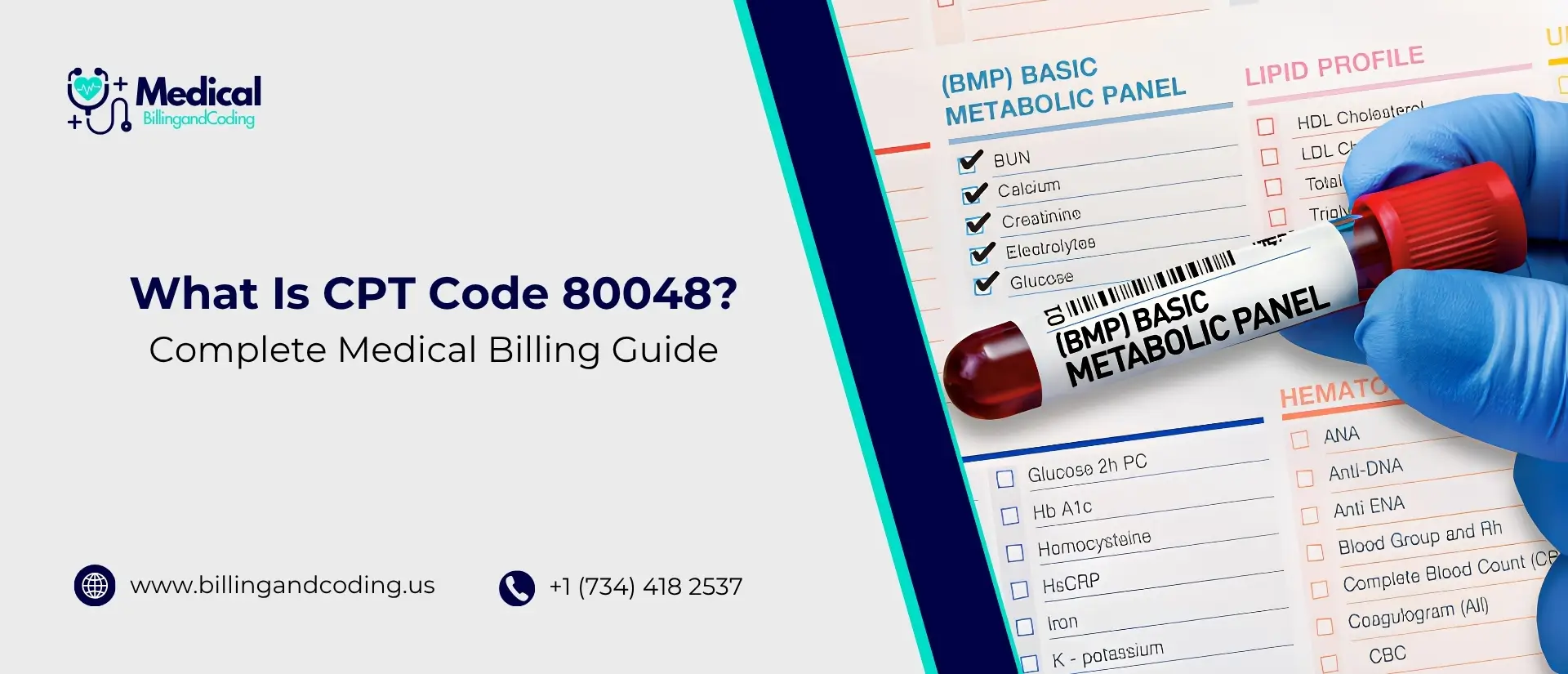
Medical billing is filled with codes that define every test, procedure and diagnosis a patient encounters. Among the most frequently used laboratory codes in clinical practice is CPT Code 80048. This code represents the Basic Metabolic Panel, a group of blood tests that give physicians a snapshot of a patient’s internal chemistry.
CPT stands for Current Procedural Terminology. The American Medical Association developed and maintains this coding system to create a standardized language between healthcare providers and insurance companies. Every time a lab test is ordered the result must be tied to a specific CPT code so the billing process can move forward accurately. CPT Code 80048 specifically identifies a panel of eight distinct laboratory tests. These tests are not random. They are carefully grouped because together they reveal how well the body is managing energy, fluid balance, kidney function and acid-base regulation. Physicians rely on this panel daily because it answers several critical clinical questions with a single blood draw.
Why CPT 80048 Matters in Medical Billing
Accurate billing is not just about getting paid. It is about ensuring the right service is documented, justified and reimbursed without triggering compliance issues. CPT 80048 matters because it is one of the highest volume laboratory codes submitted to Medicare, Medicaid and private insurers every year.
When a code is used incorrectly the financial consequences can be significant. Claim denials slow down revenue cycles. Repeated errors can trigger audits. Worse yet unbundling or upcoding lab panels can raise fraud and abuse flags that damage a practice’s reputation permanently.
Understanding this code deeply gives medical billers the foundation to submit clean claims consistently. It also helps physicians document their orders in a way that supports medical necessity which is the cornerstone of every successful reimbursement.
Overview of Basic Metabolic Panel Testing
The Basic Metabolic Panel has been a standard of care for decades. Hospitals use it in emergency settings to quickly assess a critically ill patient. Primary care physicians order it during annual wellness visits to monitor chronic conditions. Endocrinologists use it to track patients managing diabetes. Nephrologists depend on it to evaluate kidney function over time.
The test requires a simple venous blood draw. Results are typically available within a few hours in most laboratory settings. Given how much clinical information it delivers for a relatively low cost the Basic Metabolic Panel remains one of the most cost-effective diagnostic tools in modern medicine.
Understanding CPT Code 80048
What Does CPT Code 80048 Include?
CPT Code 80048 covers a panel of eight tests performed on a blood sample. These tests are glucose, calcium, sodium, potassium, carbon dioxide, chloride, blood urea nitrogen and creatinine. Each one measures something specific about how the body is functioning at a biochemical level.
The panel must include all eight components to be billed under CPT 80048. If a physician orders only a few of these tests individually then each test must be billed under its own separate CPT code. Billing the full panel code when all eight components are not performed is a compliance violation and a common audit trigger.
What makes this panel powerful is the relationship between these values. A physician does not just look at each number in isolation. Sodium and potassium together tell a story about fluid and electrolyte balance. BUN and creatinine together help calculate kidney function. Glucose alongside carbon dioxide can point toward metabolic complications in diabetic patients. The panel is greater than the sum of its parts.
Difference Between CPT 80048 and Other Lab Panel Codes
CPT 80048 is often confused with CPT 80053 and CPT 80047. Understanding the distinction is essential for coding accuracy.
CPT 80053 is the Comprehensive Metabolic Panel. It includes everything in the Basic Metabolic Panel plus five additional tests: total protein, albumin, total bilirubin, alkaline phosphatase, AST and ALT. The comprehensive panel gives a broader picture that includes liver function in addition to the metabolic and kidney markers.
CPT 80047 also represents a Basic Metabolic Panel but with one key difference. It uses ionized calcium instead of total calcium. Ionized calcium is more clinically specific and is typically measured in critical care settings. CPT 80048 uses total calcium which is the standard measurement in most outpatient and routine inpatient scenarios.
Choosing between these codes is not a matter of preference. The code must reflect exactly what the laboratory performed. Submitting the wrong panel code regardless of intent is a billing error that can result in denials or overpayment recovery demands.
When Is CPT 80048 Used?
Physicians order the Basic Metabolic Panel across a wide range of clinical scenarios. Patients with hypertension need regular electrolyte and kidney monitoring especially if they take medications like ACE inhibitors or diuretics. Diabetic patients need glucose and kidney function tracked consistently. Patients who are hospitalized for any reason often receive this panel as part of routine admission orders.
It is also ordered when a patient presents with symptoms that suggest an electrolyte imbalance such as muscle cramps, fatigue, confusion or irregular heartbeat. In emergency departments it is one of the first tests ordered for patients arriving with altered mental status, chest pain or severe dehydration.
Components of the Basic Metabolic Panel (BMP)
Tests Included in CPT 80048
The eight tests bundled under CPT 80048 each carry their own individual CPT codes when billed separately. Glucose is CPT 82947. Calcium is CPT 82310. Sodium is CPT 84295. Potassium is CPT 84132. Carbon dioxide is CPT 82374. Chloride is CPT 82435. Blood urea nitrogen is CPT 84520. Creatinine is CPT 82565.
When all eight are ordered together billing them individually rather than under the panel code is called unbundling. Unbundling is a compliance violation because payers specifically recognize these eight tests as a package under CPT 80048. Billing them separately to collect more reimbursement than the panel rate allows is considered fraudulent billing.
Purpose of Each Laboratory Test
Glucose measures the amount of sugar in the blood. It is essential for diagnosing and monitoring diabetes and for identifying hypoglycemia or hyperglycemia in both outpatient and emergency settings.
Calcium is critical for bone health, nerve signaling and muscle contraction. Abnormal calcium levels can indicate parathyroid disorders, kidney disease or certain cancers.
Sodium and potassium are the primary electrolytes in the body. They regulate fluid movement across cell membranes and are vital for heart and muscle function. Imbalances can be life threatening.
Carbon dioxide in this context measures bicarbonate levels which reflect the body’s acid-base balance. Low levels can suggest metabolic acidosis while high levels may indicate alkalosis.
Chloride works alongside sodium to maintain fluid balance and acid-base status. It is often evaluated together with sodium and bicarbonate to calculate the anion gap which helps identify the cause of acidosis.
Blood urea nitrogen and creatinine are both waste products filtered by the kidneys. Elevated levels suggest impaired kidney function. The ratio between BUN and creatinine can help clinicians distinguish between different causes of kidney dysfunction.
Common Conditions Diagnosed Using BMP
The Basic Metabolic Panel helps identify and monitor a broad spectrum of medical conditions. Chronic kidney disease is one of the most common. Diabetes mellitus requires ongoing glucose and kidney function monitoring. Heart failure patients often have electrolyte disturbances that need regular tracking. Adrenal disorders like Addison’s disease cause sodium and potassium abnormalities that the panel can detect.
Acute conditions such as severe dehydration, sepsis, diabetic ketoacidosis and drug toxicity all produce characteristic patterns on the Basic Metabolic Panel that help guide emergency treatment decisions.
CPT Code 80048 Billing Guidelines
Documentation Requirements for CPT 80048
Every claim submitted for CPT 80048 must be backed by solid documentation. The physician’s order must clearly indicate that the Basic Metabolic Panel was requested. A blanket order for “labs” without specifying the panel is insufficient and can result in a denial during a post-payment audit.
The medical record should contain the clinical indication for the test. This means the note should explain why the panel was ordered in the context of the patient’s current condition or ongoing management needs. “Monitoring chronic kidney disease” or “evaluation of electrolyte imbalance” are examples of documentation that supports medical necessity.
The laboratory report must include all eight results with reference ranges. This report becomes part of the permanent medical record and serves as evidence that the panel was fully performed as billed.
Medical Necessity for Reimbursement
Payers including Medicare will not reimburse a claim simply because a test was performed. The test must be medically necessary. Medical necessity means the service was appropriate, reasonable and required for the diagnosis or treatment of the patient’s condition.
For CPT 80048 the diagnosis codes submitted alongside the claim must logically support why a metabolic panel was needed. Submitting a metabolic panel for a patient with a sprained ankle without any other supporting diagnoses would likely raise a red flag. However submitting it for a patient with diabetes, hypertension and stage 3 chronic kidney disease presents a clear and defensible medical necessity argument.
Common Billing Errors to Avoid
The most frequent billing errors associated with CPT 80048 include unbundling the panel into individual component codes, billing CPT 80048 when CPT 80053 was actually performed, submitting the claim without a matching ICD-10 diagnosis code that supports medical necessity and failing to include the ordering physician’s NPI on the claim.
Another common error is billing the panel more frequently than the patient’s condition warrants. Routine panels ordered without documented clinical justification can be flagged as overutilization.
Modifiers and Coding Considerations for CPT 80048
When to Use Modifiers with CPT 80048
Modifiers are two-digit codes added to a CPT code to provide additional context about how or why a service was performed. For laboratory codes like CPT 80048 modifiers are used less frequently than in procedural coding but there are situations where they apply.
Modifier 91 is used when the same laboratory test must be repeated on the same day to obtain subsequent test results. This is different from confirming a result. It means a clinical decision required a second measurement later in the same day.
Modifier QW is specific to Medicare and identifies a test as a waived test under the Clinical Laboratory Improvement Amendments. If the Basic Metabolic Panel is performed using a point-of-care device with a CLIA waiver this modifier may be required.
CPT 80048 and ICD-10 Diagnosis Code Matching
Choosing the right ICD-10 codes to pair with CPT 80048 is as important as selecting the correct CPT code. Commonly paired diagnosis codes include E11.9 for type 2 diabetes without complications, N18.3 for chronic kidney disease stage 3, I10 for essential hypertension and E87.1 for hyponatremia.
The diagnosis codes must reflect what is documented in the medical record. Using a diagnosis code that does not appear in the physician’s note creates a discrepancy that can trigger a claim denial or a compliance review.
Frequency Limitations and Insurance Policies
Medicare has established Local Coverage Determinations that outline how often CPT 80048 can be billed for specific diagnoses. Routine monitoring of stable chronic conditions typically supports quarterly testing. More frequent testing must be clinically justified with documentation explaining why the increased frequency was medically necessary.
Private insurers have their own policies that may differ from Medicare. Billers should verify each payer’s specific frequency limitations before submitting claims to avoid automatic denials based on policy rather than clinical merit.
CPT 80048 Reimbursement and Insurance Coverage
Average Reimbursement for CPT Code 80048
Medicare’s reimbursement for CPT 80048 varies by geographic region due to local fee schedule adjustments. Nationally the Medicare allowable rate typically falls between $14 and $16. Private insurers often reimburse at higher rates depending on their contracted fee schedules with the laboratory.
While the individual reimbursement rate may seem modest the volume at which this code is billed across large health systems makes accurate coding financially significant. A billing error on a high-volume code like this compounds quickly.
Medicare and Commercial Insurance Coverage
Medicare Part B covers CPT 80048 when ordered by a treating physician and when medical necessity is established through appropriate diagnosis coding. The beneficiary may be responsible for a 20% coinsurance after the Part B deductible is met unless they have supplemental coverage.
Most commercial insurers cover the Basic Metabolic Panel as a standard diagnostic service. Coverage terms vary and some plans may require that labs be performed at an in-network facility to receive full benefits.
Factors Affecting Claim Approval
Clean claim submission depends on several factors working together correctly. The ordering provider must be enrolled with the payer. The laboratory must be credentialed and in-network if required. The diagnosis codes must support medical necessity. The claim must be submitted within the payer’s timely filing deadline. Any missing or incorrect information at any one of these points can result in a denial.
Common Denials and How to Avoid Them
Reasons Claims for CPT 80048 Get Denied
The most common denial reasons include lack of medical necessity, frequency exceeded, invalid diagnosis code, missing ordering provider information and incorrect place of service. Bundling edits also cause denials when payers detect that component codes were billed separately alongside the panel code.
How to Correct and Resubmit Denied Claims
When a claim for CPT 80048 is denied the first step is reviewing the Explanation of Benefits or remittance advice to identify the denial reason code. Once the error is identified the claim should be corrected and resubmitted within the payer’s appeal timeframe.
For medical necessity denials a letter of medical necessity from the ordering physician can be submitted with the appeal. This letter should clearly explain the clinical rationale for the panel in the context of the patient’s specific condition.
Best Practices for Clean Claim Submission
Verify patient eligibility and benefits before the lab order is placed. Confirm the diagnosis codes are current and supported by the clinical documentation. Review the claim for completeness before submission. Implement a pre-billing audit process that checks for common errors specific to laboratory claims.
CPT 80048 vs Similar CPT Codes
CPT 80048 vs CPT 80053
CPT 80053 adds liver function tests to the Basic Metabolic Panel. The choice between these two codes must reflect what was actually ordered and performed. Billing CPT 80048 when the comprehensive panel was performed is undercoding. Billing CPT 80053 when only the basic panel was performed is upcoding. Both are errors with compliance consequences.
CPT 80048 vs CPT 80061
CPT 80061 is the Lipid Panel which includes total cholesterol, HDL cholesterol, LDL cholesterol and triglycerides. It has no overlap with CPT 80048 and can be billed on the same date of service when both are medically necessary and documented.
Choosing the Correct Lab Panel Code
The correct code is always determined by what the laboratory actually performed and what the physician actually ordered. Medical coders should never select a code based on what would yield a higher reimbursement or what seems close enough. Precision is non-negotiable in laboratory billing.
Best Practices for Accurate CPT 80048 Billing
Importance of Accurate Documentation
Documentation is the foundation of every reimbursable claim. Without it even a perfectly ordered and performed test can be denied or recouped. Physicians should develop habits of clearly documenting the clinical reason for every laboratory order in the same note where the order appears.
Role of Medical Coders in Laboratory Billing
Medical coders serve as the critical link between clinical documentation and claim submission. For laboratory billing this means understanding not just the CPT code definitions but also the payer-specific policies, bundling rules and frequency limitations that govern how those codes are reimbursed.
Tips to Improve Reimbursement Rates
Regular coder education on laboratory billing updates is essential. Annual changes to Medicare fee schedules and Local Coverage Determinations affect reimbursement. Conducting internal audits of high-volume codes like CPT 80048 helps identify patterns of error before external audits do.
Final Thoughts on Accurate Billing and Coding
Medical billing is not a back-office function disconnected from patient care. Every correctly submitted claim supports the financial health of the practice that delivers that care. For high-volume codes like CPT 80048 getting the details right consistently is what separates practices that thrive from those that struggle with revenue cycle challenges. Invest in coder education, maintain thorough documentation standards and treat compliance not as a burden but as the professional baseline every billing team should meet.
Make An Appintment With Us